Sometimes I’m shocked to wake up and realize that it’s 2017 there’s still so much conflict and suffering in our world. We need more and better ways to provide aid, education, and support for developing countries and for those individuals who are struggling due to poverty, hunger, lack of education, poor access to clean water, disease, and violence, among many other challenges.
On March 1, 1961, President John F. Kennedy took a giant step in the right direction when he created the Peace Corps[1], whose mission today focuses on providing hands-on, grassroots-driven initiatives, including developing health campaigns, building schools, improving agricultural practices, boosting local entrepreneurship, and teaching digital literacy, just to name a few. And while there is still a long way to go to eliminate suffering and to better the lives of those in need of help around the world, hundreds of thousands of Peace Corps volunteers have stepped up in 140 different countries over more than five decades to be of service.
Some of those volunteers have found their way to Pacifica as recipients of the Paul D. Coverdell fellowship [2], providing financial assistance to returned Peace Corps Volunteers pursuing graduate work. To honor the anniversary month of the Peace Corps, Pacifica is spotlighting some of the Coverdell Fellows currently enrolled in graduate programs at Pacifica through the Discussions in Depth Psychology interview series.
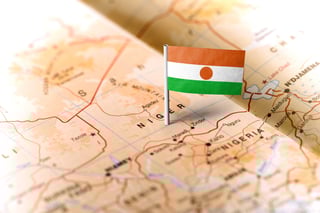 First up is Stephanie Steiner, who is in her first year of studies in the Community Psychology, Liberation Psychology, and Ecopsychology (CLE) specialization at Pacifica. I’m impressed that Stephanie has discovered the C.L.E. specialization, which appeals for peace, community, non-violence, and conflict resolution. It seems a natural fit with her experience in the Peace Corps. Stephanie, who served in Niger, West Africa, from 2002 to 2005, joined the Peace Corps after completing her undergraduate degree in environmental studies and international development.
Having served her final semester abroad in Panama, her first time in a developing country was transformative, opening her eyes to some of the issues she had been studying, and also to U.S. involvement in other parts of the world. She really appreciated the chance to see how some of the theories she was learning about as an undergrad were actually playing out in real world situations.... Read the full post here
